Ask a sushi chef what separates memorable sashimi from the forgettable sort and you tend to get the same answer. The plate, the price and the lighting count for little. What matters is the fish, and how quickly and carefully it has been handled. Fresh sashimi in London is less a marketing phrase than a timetable — one measured in hours, not days.
You can usually tell within a minute of sitting down. Dull tuna instead of a deep, glossy red. Salmon that smells faintly of the fridge. Rice that's cold and clumped. Somewhere that gets it right does the opposite: fish that gleams, a clean, faintly oceanic smell, rice that's barely warm, seasoned and loose.
Dozo has been at this since 2011 in South Kensington and 2013 in Soho, and the sashimi corner in each restaurant is where the interesting work happens. If you're new to sushi, it helps to know what the kitchen is doing before the plate reaches you.
What 'fresh' actually means
Here's the first thing worth unlearning: fresh does not mean never frozen. In the UK, much of the fish served raw is frozen first, usually at -20°C or below, to deal with parasites. That's not a shortcut, it's food safety, and good kitchens will say so rather than pretend otherwise. The real question isn't whether the fish was frozen but how it was treated before and after.
What matters is the journey. How the fish was killed. How quickly it was chilled. How steadily it was stored. How it was butchered. A tuna landed well and kept at a constant temperature will taste cleaner on its third day than a poorly handled one on its first.
Ageing plays a part. Some fish improve with a short rest — tuna, in particular, often benefits from a couple of days, during which the flesh relaxes, the flavour deepens and the texture softens. Oily fish such as mackerel are the opposite and want eating quickly, which is why you'll often see them cured or lightly marinated rather than served completely bare.
The quality of raw fish for sushi comes down to all of this: smell, sheen, texture, and the way a slice holds its shape. A good piece of sashimi should look like it's resting rather than collapsing, and it should never taste of anything other than itself.
Seasonality counts, too. The best kitchens don't try to serve everything all year round. If a particular fish isn't at its best, it quietly comes off the board and something else takes its place.
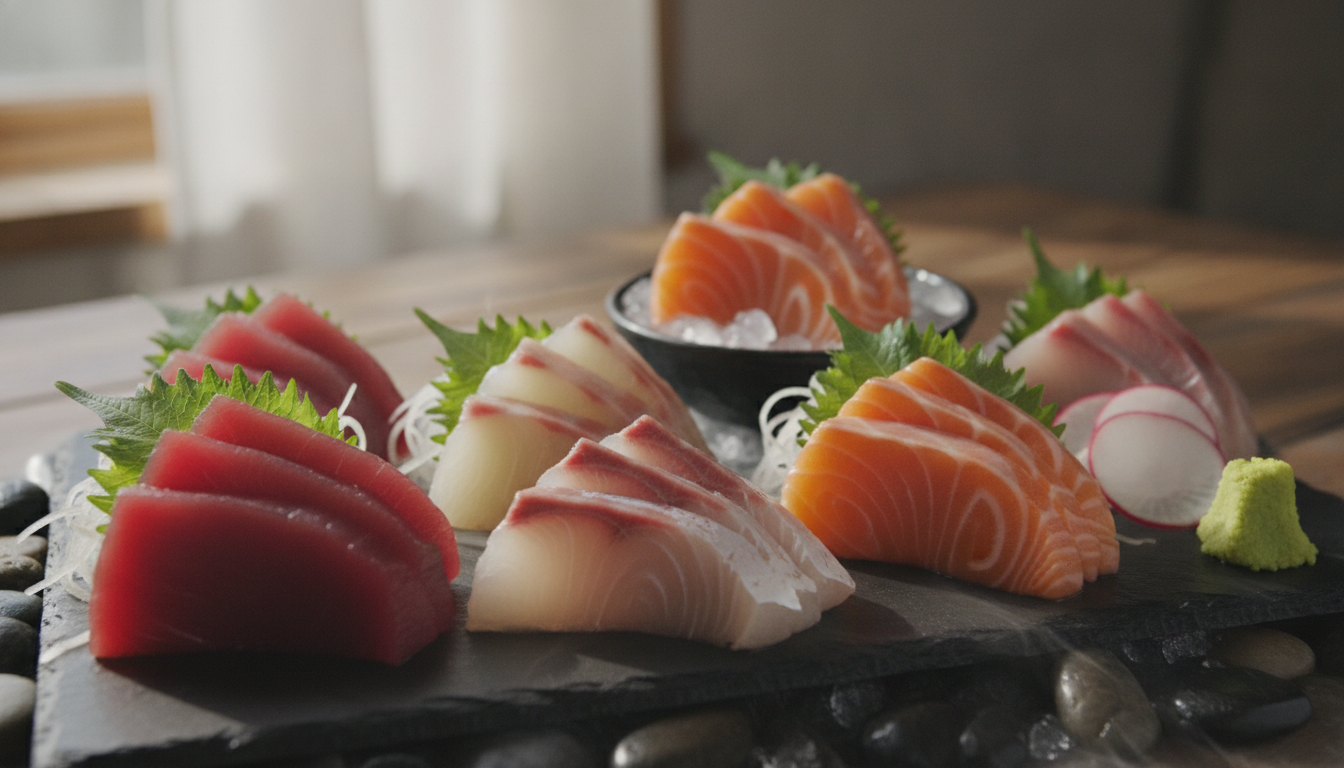
Different fish behave differently, which is why an experienced counter treats each one on its own terms. Tuna is dense and rich and takes a heavier cut. Salmon is soft and needs a light hand. Yellowtail sits somewhere between the two. Sea bream is delicate and often benefits from a little salt. You don't need to memorise any of it — but once you've tasted a fish at its best, you notice immediately when it isn't.
The knife, the grain, and why a slice is a decision
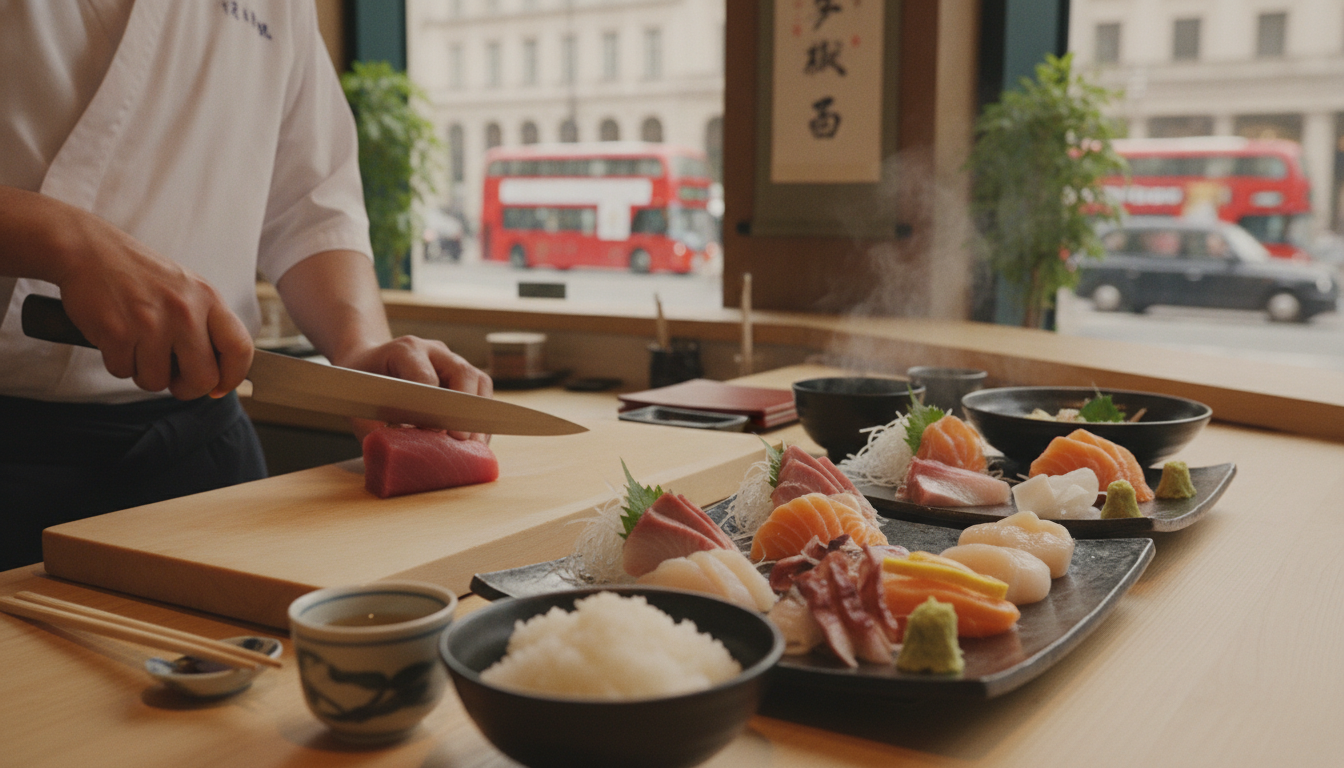
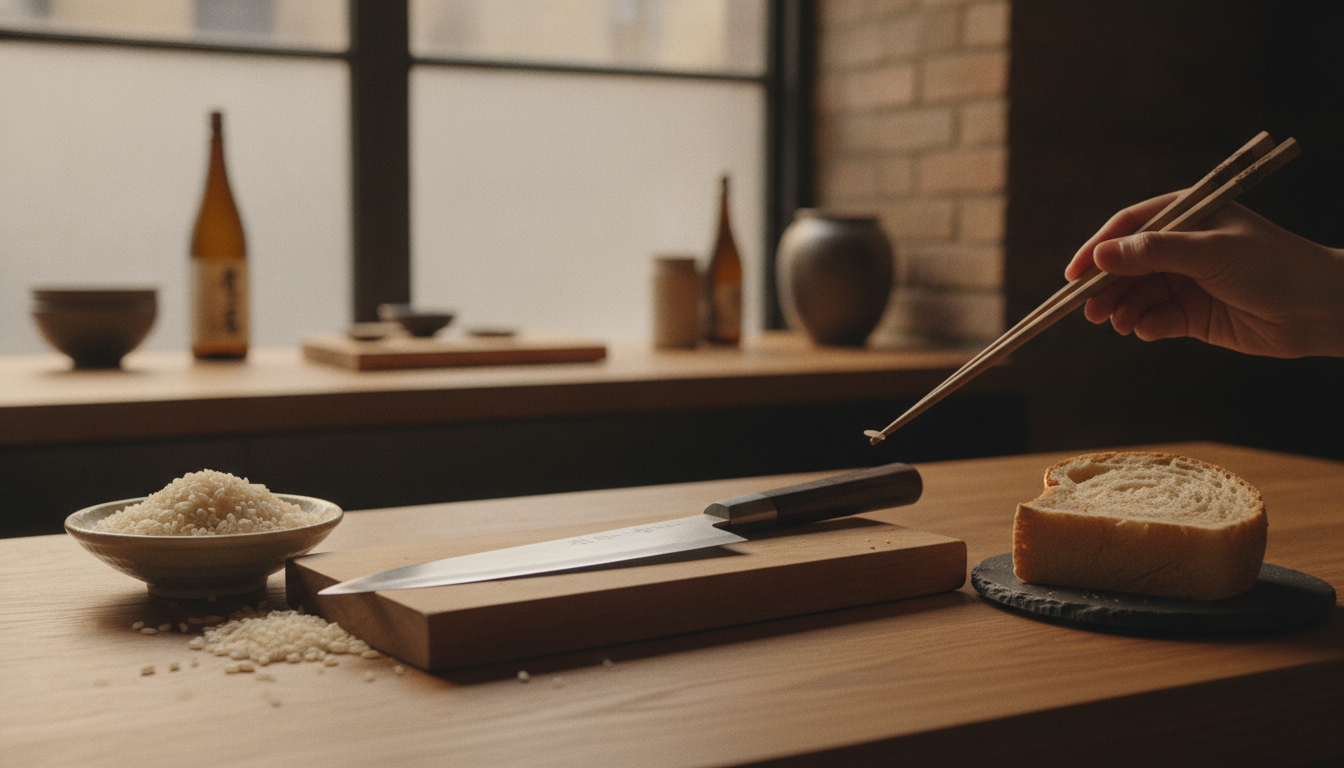
Watching a chef work the sashimi corner is half the pleasure. There's no sawing. One long drawing stroke from heel to tip, so the surface stays smooth and the fibres aren't bruised. Two or three passes over the same piece and the texture goes slightly ragged — you can feel it on the tongue even if you can't name it.
Direction matters as much as sharpness. Tuna is usually cut across the grain, which shortens the fibres and gives that clean, almost buttery bite. Softer, more delicate fish are handled the other way so they don't fall apart. The same fillet, sliced two different ways, will eat like two different fish.
Temperature is the quiet variable. Fish straight from the fridge tastes muted, so most chefs let it come up a few degrees before slicing. Rice should be close to body temperature, seasoned with vinegar, sugar and salt, and pressed just firmly enough to hold. Squeeze it too hard and it turns to paste.
Then there's the wasabi. Freshly grated root has a bright, fleeting heat that fades rather than burns. The stuff in a tube is a different product altogether. None of this is theatre for its own sake — it's the line between fresh sashimi London kitchens and ones that simply serve raw fish.
Sitting at the counter changes how you eat. There's no trolley, no long wait, no plate travelling across a dining room. A slice is cut, laid, brushed with a little soy or left plain, and handed over within seconds. That short distance between the board and your mouth is a big part of why counter seats are worth asking for, especially in Soho, where the room fills quickly.
Where to find fresh sashimi in London: Soho and South Kensington
Dozo runs two rooms, and they pull quite different crowds.
The Soho site on Old Compton Street is the busier of the two. It's a couple of minutes from the theatres, and the evening has a rhythm to it: an early pre-curtain wave, then a second around 10pm, when Chinatown empties out and people fancy something cold, clean and quick. It's proper late-night territory. If you're after the best sashimi Soho can put in front of you, take a counter seat on a Friday evening and watch each piece of nigiri being formed and sent straight across.
South Kensington is a gentler affair. The restaurant on Old Brompton Road is a short walk from the tube and a few minutes from the museums, so lunchtimes fill with people who've been on their feet all morning in the Natural History Museum or the V&A. The pace is slower, the room is easy, and it's a good spot for a weekday lunch that doesn't drag on. Among sashimi restaurants in London, this one is especially handy if you're in SW7 with an afternoon to fill.
The two sites suit different moods. Soho is for a night out — pre-theatre, post-theatre, a table with friends and a bit of noise. South Kensington is for a long lunch, a quiet dinner after a gallery, or a midweek meal where nobody's in a rush. Same kitchen principles, different energy.
Both kitchens work to the same principle: a compact sashimi corner, fish prepped in small batches through the day rather than in one big push before opening. That's what keeps the slices glossy at 3pm and at 10pm alike. There are photos of both rooms and a fair few plates on the Dozo gallery page if you want a look before you book, and the full range of cuts is listed on the Dozo Soho menu. We've also written before about how the sashimi counter is run if you want the kitchen's side of it.
How to order, if you're not sure where to start
Start with sashimi on its own, before anything with sauce or spice. It's the cleanest read on the kitchen. A mixed plate will usually give you three or four types of fish, and the idea is to work from the lightest to the richest so the delicate ones don't get drowned out.
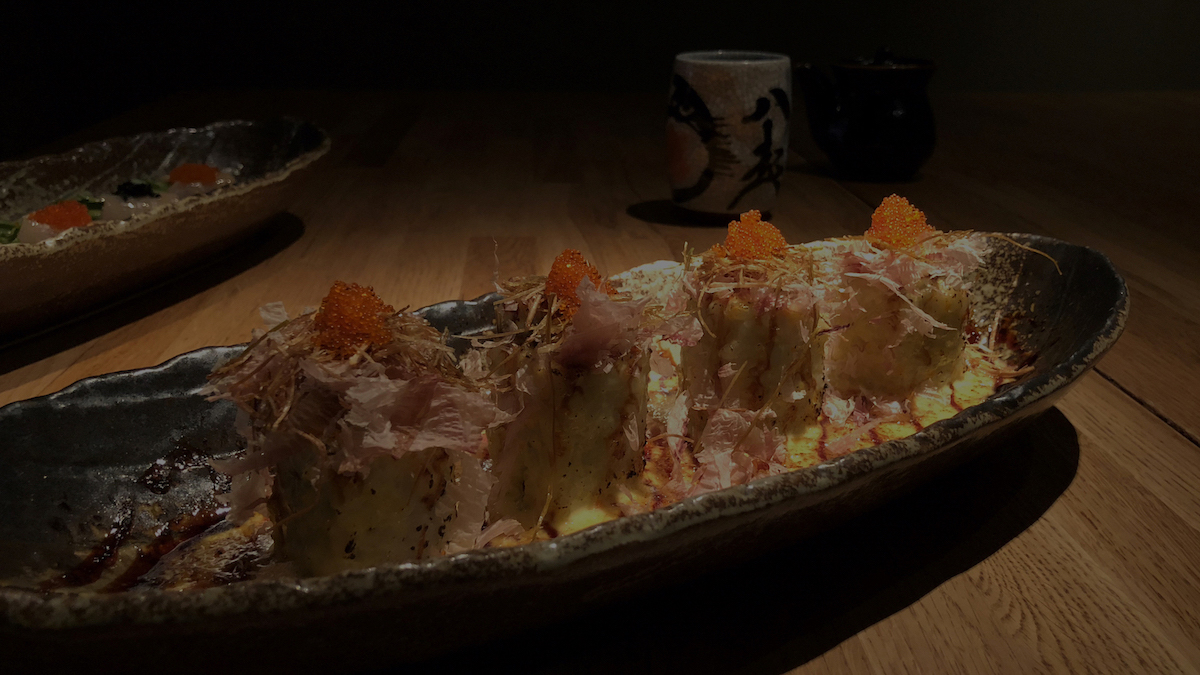
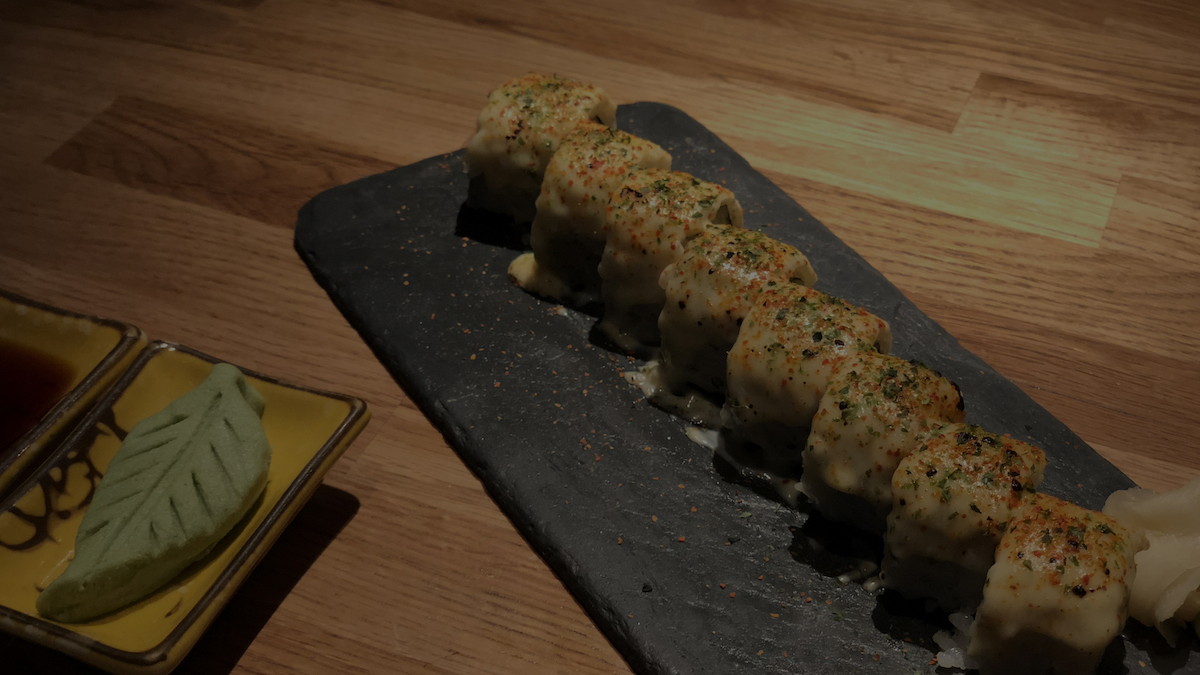
Then move on to nigiri — fish over seasoned rice, formed by hand. If you're new to sushi, this is where the rice matters most. Eat each piece in one bite, in the same moment it arrives. Maki rolls come next, nori outside, rice and fillings within. The spider maki, built around soft-shell crab, is the one regulars order without looking at the menu.
If you want something hot alongside all that cold, the beef nabe is a sensible call on a wet evening — a slow-simmered pot that takes the chill off. Sake works better with sashimi than most people expect: a dry junmai, served cool, cleans the palate between pieces without competing with the fish. There's a decent range of sake, Japanese whisky and cocktails at the Dozo Soho bar, and the staff will steer you if you're stuck.
As for how much to order, the usual mistake is going too broad. Two or three types of fish, a couple of pieces of nigiri and one roll will teach you more about a kitchen than a platter of ten things. Ask what's good that day. A good chef will tell you honestly, and you'll end up with a better meal than the one on the printed page.
Lunch is where the value sits. The weekday lunch sets run Monday to Friday, 12–3pm — see the Soho lunch sets at Dozo or the South Kensington lunch sets — and they're a sensible introduction if you're not ready to commit to a full à la carte order. Finish with green tea ice cream: bitter, cold and faintly grassy, and a far better ending than anything chocolate-based.
Sashimi questions we hear at the counter
Is sashimi just raw fish?
Roughly, but the useful distinction is in the preparation. Sashimi is sliced and served on its own, without rice. Sushi refers to the seasoned rice — nigiri is fish over rice, and maki is fish and rice rolled in nori. A sashimi plate and a nigiri plate can come from the same fillet and still eat quite differently.
How do I know if a place is any good?
Look at the fish rather than the menu. It should be glossy, not watery, and it shouldn't smell of the fridge. The rice should be loose and just warm. If the slices taste cold and flat, the kitchen is working from the fridge rather than to order.
Do I need to book?
It depends when you're going. Weekday lunches in South Kensington are usually straightforward. Friday and Saturday evenings in Soho are not, especially around theatre times, so a quick call ahead is the sensible move.
If you'd like to test any of this yourself, the full sushi, sashimi and maki menu at Dozo Soho and the South Kensington menu are both online, and you'll find directions and opening hours for each restaurant on the Dozo contact page.