London has no shortage of sushi bars, but finding one that treats sake with the same care as its fish is a different matter. Dozo Sushi, with branches in South Kensington and Soho, has built a following over the past decade for pairing the two. Ask for a table at either address and you'll soon understand why.
The original shop on Old Brompton Road has been open since 2011. It's a calm, modern place a short walk from the Natural History Museum, and it still draws a loyal local crowd. The Soho outpost, on Old Compton Street since 2013, sits in the middle of restaurant rows and theatreland. On Friday nights, the place hums with diners who want sushi before a show. Both share a quiet commitment to good fish, proper rice and a sake list that rewards curiosity.
The question we are asked most often is what to drink with a plate of nigiri or sashimi. This guide is our answer, whatever your level of experience with sake.
Both branches carry a selection that runs from crisp, dry brews to richer, sweeter ones. Our serving staff have each bottle's tasting notes memorised, and they can recommend a pour to match a specific fish or a particular mood. That is the kind of service you rarely find in a typical sushi spot.
Sake and Sushi: The Basics
Most sake is best served chilled. Warm sake is a holdover from an era when lower-grade bottles were masked by heat. These days, you nearly always drink sake cold or at room temperature. But rules are made to be broken: a robust, earthy sake can be a treat gently warmed on a cold winter evening. For sushi, though, you want something lean and dry.
Pairing sake with sushi is about matching weight, not flavour. A light, dry sake works like a squeeze of lemon, cleansing the palate between pieces. And because sake has a savoury, slightly lactic edge, it sits more naturally with vinegared rice than most wines. Look for junmai or honjozo on a label for fuller body; ginjo and daiginjo bring perfume and delicate fruit.
The rice polishing ratio, known as seimaibuai, also influences character. When more of the outer grain is milled away, the sake becomes more fragrant and refined. A daiginjo, with a high polish, is the most delicate expression you can buy. If you want to understand the labels, ask our staff to explain the difference; they enjoy the subject.
If you are new to sake, don't get lost in terminology. Ask for a glass of each style and taste them side by side. Compare a dry junmai with a fruity ginjo, and notice how they change with each sip. Our team has tried every sake on the list and knows which one will suit your choice of fish. They can also explain words like genshu, which means undiluted, or nama, unpasteurised, for when you want to dig deeper.
A word about strength: sake is usually 15 to 16 percent alcohol, so it is stronger than wine. That's why it is poured in small glasses. Enjoy it slowly, and let it unfold.
If you want the full aromatic profile, ask for your sake in a wine glass rather than the traditional ceramic cup. You'll notice melon, apples and rice notes you might have missed. Dozo is glad to accommodate.
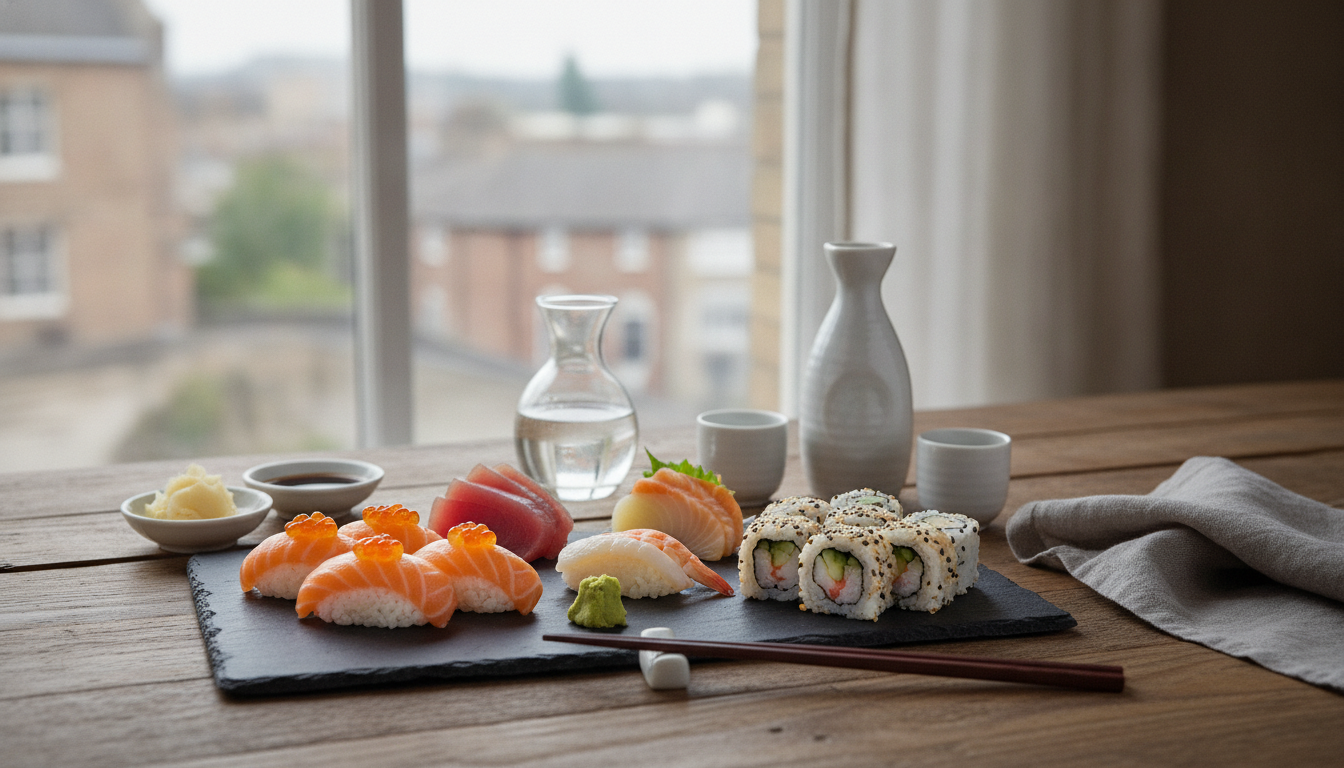
What to Drink with Sashimi and Nigiri
For a plate of plain sashimi, the goal is not to compete with the fish. A honjozo or a light ginjo is usually ideal. Tuna is the exception: its dense, beefy character calls for a junmai with a rounded body. For a delicate white fish like sea bass, a floral, melon-scented sake works beautifully.
At the counter in South Kensington, the chef often suggests combining three or four types of fish, letting you contrast the textures. That is the moment to try a flight of sake and see how each style interacts with the same slice.
Wasabi and pickled ginger are not just garnish. Ginger clears the palate; wasabi brings heat. If you like wasabi with a kick, a fuller junmai will cope better than a fragile ginjo.
Soy sauce deserves caution. You only need a drop to make a good sake taste metallic. So if you dip your fish, pause the sake for a moment and take a sip of water. It's a small detail, but it transforms the meal.
At our South Kensington branch, ask for a seat at the counter. You can watch the chef slice a mixed sashimi platter of salmon, yellowtail and sea bream. The pace on Old Brompton Road suits a quiet lunch before heading to the V&A or Imperial College. Have a look at the South Kensington menu in advance, or simply ask what has come in that morning.
Maki rolls bring out a more playful side of sake. Spicy tuna maki is best with a cloudy nigori; its sweetness and soft texture calm the heat. Spider maki, with crispy soft shell crab and avocado, enjoys a dry junmai. Plain cucumber maki needs nothing more than a clean glass. And if you're nibbling edamame, a lightly sparkling sake is a surprisingly good palate resetter.
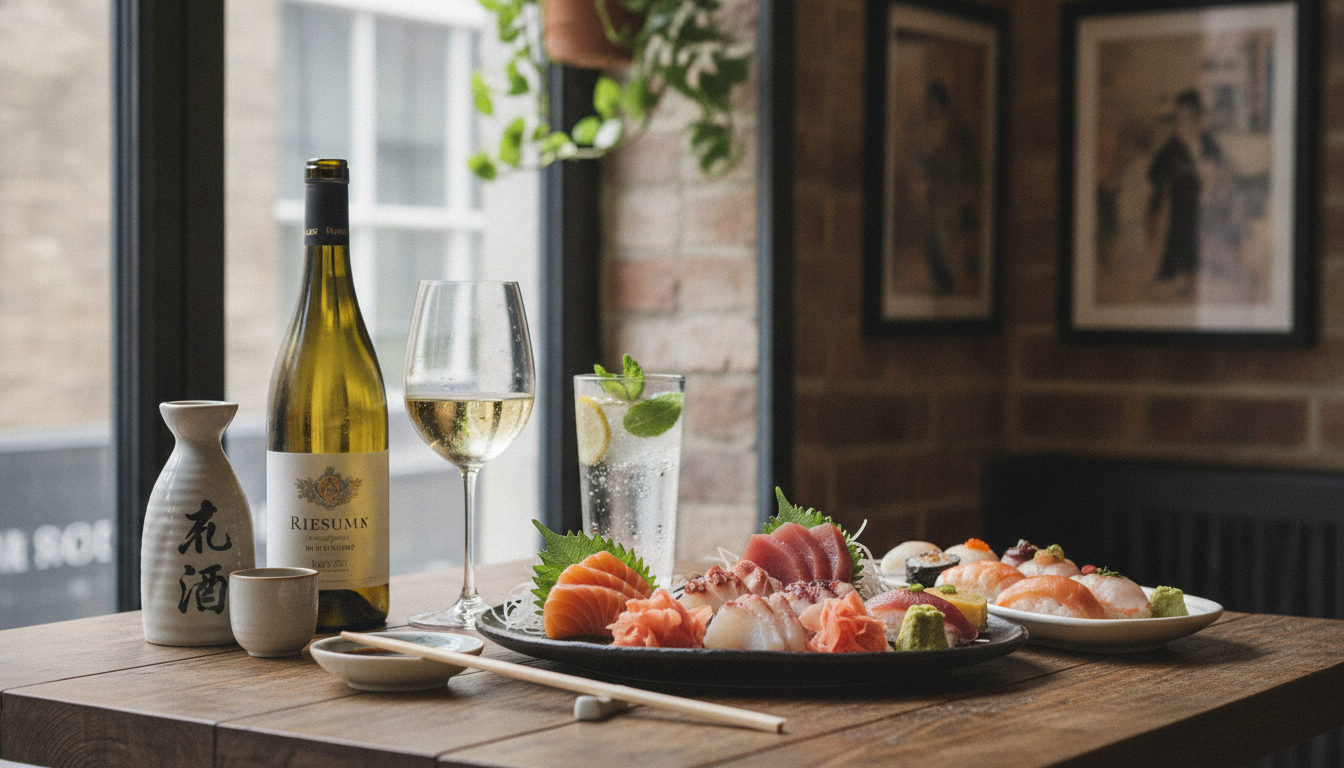
Sake Bar London: A Quiet Corner of Soho
In Tokyo you can find a dedicated sake bar on almost every corner. In London, that's rare. Dozo Soho is different. Set on Old Compton Street, it gives you a serious sake list without sacrificing the sushi. The room is small and lively, and the counter is the best seat in the house, especially for solo diners.
The Soho drinks list is concise but clever. There's a dry junmai, a fragrant ginjo, and occasionally a daiginjo if you want to push the boat out. A sparkling sake makes a good aperitif. If you are in the area on a weekday, the Soho lunch sets offer a range of dishes and the option to add a sake pairing. The team can talk you through each pour.
Friday evenings on Old Compton Street are busy, so book ahead if you want a counter stool. Once you are settled, the chefs move with quiet precision, turning raw tuna and salmon into neat, glossy nigiri. It is a reassuringly simple display of skill.
Japanese Drinks London: Beyond Sake
Sake is only the beginning. A growing number of diners start their evening with a chilled sake and finish with Japanese whisky. As a progression, it works because whisky is too assertive for raw fish but superb after a hot, savoury course like grilled yakitori or beef nabe. A Nikka from the barrel or a soft Yamazaki makes a memorable digestif.
Our bars also mix sake or shochu into cocktails, and there is always a bottle of umeshu, Japanese plum liqueur, to tempt you. Green tea ice cream is the obvious dessert, but an aged umeshu makes a more interesting final course. If you have been walking through the exhibition halls, the South Kensington lunch menu is a good way to refuel without haste.
With spicy tuna maki, a sake cocktail might even beat a straight pour. Muddle lime with a little shochu, top up with tonic, and you have a drink that matches the roll's heat. Purists might frown, but it's your meal. If you are curious what the dishes look like, the photo gallery is worth a browse before you book.
Our Favourite Pairings on the Dozo Menu
After years at two London addresses, these are the pairings we keep coming back to:
- Hokkaido scallop sashimi. The shellfish is sweet and minerally, so a cold ginjo lifts it. Ask for one with apple and citrus notes if you're not sure.
- Spicy tuna maki. This needs a slightly sweet or sparkling sake to take the edge off the heat. A cloudy nigori is our first choice.
- Unagi nigiri. The glaze is sweet and salty, so a full, dry junmai stands up to it. As Japanese as it gets.
Once you feel more confident, order a sake flight with a mixed plate of sushi and sashimi. It is a real education to see how the same fish changes when you change the drink. And whatever you do, don't skip dessert. A little sake with green tea ice cream is surprisingly good.
For the complete menu, visit the Soho menu or read our story since 2011.
Frequently Asked Questions
Can I pair sake with sushi when I'm eating alone? Yes - please do. The counter at either branch is friendly, and you can order individual pieces of nigiri, a few sashimi cuts and sake by the glass. Tell the team what you like and they will guide you.
Should sake be served warm or chilled? For sushi, chilled is usually better, but it's a flexible drink. If you are having a hot dish such as beef nabe, a warm, earthy sake is a lovely complement. Just make sure it's a decent sake, not the cheapest bottle.
Which sake goes with spicy maki rolls? A slightly sweet or sparkling sake tames the chilli. Nigori, the cloudy, unfiltered style, tends to be sweeter and rounder, so it's a safe choice. If in doubt, ask for a nigori.
Next time you are in Soho or South Kensington and wondering what to drink with your sushi, give sake a go. Your palate will thank you. Find our addresses and opening hours and come by.